
Croatian Cuisine, Festivals, and Local Traditions: Reconnecting with Your Roots
Croatian culture and traditions offer a meaningful way for diaspora families to reconnect with their heritage, rediscover their ancestral homeland, and introduce their children to the roots of their family history. From regional cuisine and traditional festivals to local customs and everyday life, Croatia provides opportunities to turn a family connection into a lived experience.
For many Croatian families returning home, the journey goes beyond citizenship and relocation. It is about understanding the places their ancestors came from, reconnecting with relatives, and discovering how traditions continue to shape Croatian life today.
Whether you grew up enjoying Croatian food abroad, celebrating family traditions, or listening to stories about your parents’ or grandparents’ hometown, living in Croatia allows you to explore these connections in a new way.
At LetsGo2Cro, we recognize that returning to Croatia is not just about moving to a new address. It is also about reconnecting with your roots, embracing your heritage, and helping the next generation develop its own connection to Croatia.
Croatian Cuisine: More Than Food, a Connection to Your Roots
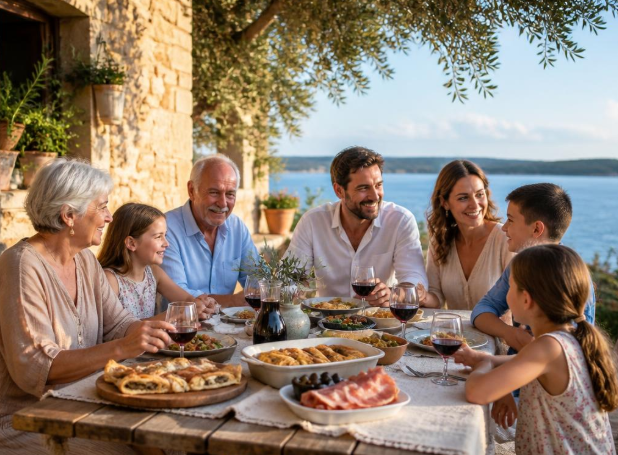
For many Croatian families living abroad, traditional food is already a familiar part of family life. Recipes are passed down through generations, favorite dishes appear at celebrations, and the kitchen becomes a place where stories and memories are shared.
Returning to Croatia creates an opportunity to explore these familiar flavors in a new way.
You might discover the regional origins of a family recipe, visit the local market where seasonal ingredients are sold, or taste a dish prepared according to traditions that have been maintained in a particular town or village for generations.
Discovering Croatia Through Its Regional Cuisine
Croatian cuisine reflects the country’s diverse geography and cultural history.
In Dalmatia, coastal cooking often centers on fresh fish, olive oil, seasonal vegetables, and Mediterranean herbs. Istria is known for its truffles, olive oils, wine, and distinctive pasta dishes. In Slavonia, hearty meals, paprika-rich specialties, cured meats, and traditional pastries reflect a different culinary heritage.
Across Croatia, regional dishes tell stories about local ingredients, historical influences, family life, and the relationship between communities and their surroundings.
Exploring these differences can help returning families discover connections they may not have known existed within their own heritage.
A recipe remembered from a grandparent might have originated in a particular region. A dish served at family celebrations might reflect a local custom or seasonal tradition. Understanding these connections can bring a new dimension to familiar family memories.
Sharing Croatian Food With the Next Generation
For children growing up abroad, Croatian food may already be part of their identity. Returning to Croatia allows them to experience the wider cultural context behind those traditions.
They can visit local bakeries, explore village markets, learn about regional ingredients, and cook alongside relatives. They can discover why certain dishes are associated with Christmas, Easter, weddings, or family gatherings.
These everyday experiences help children connect family traditions with the country itself.
Food becomes more than something inherited from parents or grandparents. It becomes a way to understand the places, people, and stories that form part of their family’s Croatian heritage.
Croatian Festivals: Experiencing Living Traditions
Festivals and local celebrations offer another way to reconnect with Croatian roots. Across the country, communities maintain traditions through music, dance, religious celebrations, historic events, and seasonal festivities.
For returning families, participating in these events can create a stronger connection to local life and provide children with experiences that bring their heritage to life.
Discovering Croatia’s Cultural Celebrations
Croatia’s festivals reflect its regional diversity and rich cultural history.
- Sinjska Alka: This historic equestrian tournament in Sinj celebrates a distinctive local tradition through ceremonial dress, competition, and community participation.
- Dubrovnik Summer Festival: Theatre, music, and dance performances bring cultural life to Dubrovnik’s historic settings.
- Vinkovačke jeseni: This major folklore event celebrates Slavonian traditions through traditional costumes, music, dance, and regional customs.
- The Feast of St. Blaise: Celebrated in Dubrovnik on 3 February, this important festival honours the city’s patron saint and its longstanding traditions.
- Rijeka Carnival: Colourful parades, masks, costumes, and community celebrations make carnival season a distinctive part of Rijeka’s cultural calendar.
- Advent and Christmas celebrations: Seasonal markets, family gatherings, traditional foods, and local customs bring communities together throughout the festive period.
These celebrations are more than attractions to visit. They offer opportunities to understand the histories, values, and customs that continue to shape Croatian communities.
Helping Children Experience Their Heritage Firsthand
Children may have heard about Croatian traditions from relatives or experienced them through community events abroad. Living in Croatia can give them the chance to participate directly.
They can watch traditional performances, hear regional music, discover local celebrations, and learn why particular customs matter to the people who maintain them.
These experiences can turn an abstract connection to their ancestry into something tangible and memorable.
Over time, children can develop their own relationships with Croatian culture, creating memories that become part of their personal and family stories.
Local Traditions: Understanding Everyday Croatian Life
Culture is not limited to festivals or special occasions. It is also found in the everyday rhythms of life: the way people socialise, celebrate milestones, maintain family relationships, and connect with their communities.
For Croatian diaspora families returning home, understanding these everyday customs can be an important part of feeling connected to the country.
Coffee, Conversation, and Community
Coffee culture is a familiar feature of social life in many parts of Croatia. Meeting friends for coffee can be an opportunity to catch up, discuss everyday life, and maintain relationships.
For newcomers, these small routines can become a way to build friendships and feel more connected to their local community.
The experience of living in Croatia is shaped not only by its landmarks and landscapes, but also by these everyday interactions.
Family Gatherings and Celebrations
Family connections remain an important part of Croatian cultural life. Sunday lunches, birthdays, name days where observed, weddings, and religious holidays provide opportunities for relatives to gather and celebrate.
Returning families may find that these occasions help them reconnect with extended relatives and rediscover customs that have been maintained within their family or local community.
For children, spending time with relatives and participating in family celebrations can help them develop relationships with both their family history and their present-day surroundings.
Language, Music, and Regional Identity
Language can provide a powerful connection to family roots. Even for children who are still learning Croatian, everyday conversations, local expressions, and interactions with relatives can make the language feel more relevant and familiar.
Music and dance offer further opportunities to explore regional identity. Dalmatian klapa singing, Slavonian tamburica music, and traditional folk dances reflect different aspects of Croatia’s cultural diversity.
Discovering these traditions helps families understand that Croatian identity is not one uniform experience. It includes many regional histories, local customs, and different ways of expressing cultural belonging.
Returning to Croatia: Reconnecting With Your Heritage
For people of Croatian descent, returning to Croatia can be both a practical relocation and a deeply personal experience.
Citizenship may formalize a legal connection to the country, while relocating creates opportunities to develop that connection through everyday life. Visiting a family hometown, meeting relatives, learning more about regional customs, or exploring the places described in family stories can make ancestry feel more immediate.
Some families may recognise familiar traditions from their childhoods abroad. Others may discover customs, places, or aspects of Croatian history that are new to them.
Both experiences are part of reconnecting with one’s roots.
It is also important to recognise that returning does not mean every aspect of life will feel familiar immediately. Cultural connections develop over time through relationships, participation, language, and shared experiences.
Building a life in Croatia allows families to explore their heritage in their own way, combining the traditions they have carried with them with new experiences in their ancestral homeland.
Passing Croatian Heritage to the Next Generation
For parents returning to Croatia with children, one of the most meaningful aspects of the journey can be helping the next generation understand its family roots.
Children do not need to experience every tradition in exactly the same way their parents or grandparents did. Instead, they can develop their own connection to Croatian culture through the experiences available to them.
Families can support this process by:
- Visiting the towns and villages connected to their family history.
- Spending time with relatives and listening to family stories.
- Exploring regional food traditions and learning family recipes.
- Attending local festivals, folklore performances, and seasonal celebrations.
- Encouraging children to learn Croatian through everyday interactions.
- Discovering local museums, historic sites, and cultural landmarks.
- Creating new family traditions that combine inherited customs with life in Croatia.
These experiences help children understand that their heritage is not confined to photographs, old stories, or occasional visits. It is something they can explore, question, experience, and carry forward.
Most importantly, children can grow up understanding that their connection to Croatia is their own to develop, even as it remains part of a wider family story.
Making Croatia Feel Like Home
Reconnecting with Croatian roots is a journey that continues long after the move itself.
Finding a home, navigating administration, and arranging practical matters are important parts of relocation. But becoming familiar with local life, building relationships, understanding customs, and participating in community traditions can make the experience more meaningful.
For returning diaspora families, Croatian cuisine, festivals, and local traditions provide natural starting points.
A meal shared with relatives, a visit to an ancestral hometown, a local celebration, or a conversation in Croatian can become part of the process of making a new life feel connected to the past.
These moments do not need to be grand or carefully planned. Often, it is the everyday experiences that create the strongest sense of belonging.
At LetsGo2Cro, we understand that returning to Croatia involves more than the administrative steps of citizenship and relocation. For many families, it is also about rediscovering their heritage and finding their place in the country their family calls home.
Our work supports members of the Croatian diaspora as they navigate their Croatian journey, from citizenship and relocation planning to understanding life in Croatia.
Keeping Your Roots Alive in Croatia
Croatian cuisine, festivals, and local traditions offer meaningful ways for diaspora families to reconnect with their heritage and build a deeper relationship with their ancestral homeland.
Through regional food, community celebrations, everyday customs, and family connections, returning families can discover new dimensions of a culture that may already have been part of their lives for generations.
For children, these experiences provide opportunities to understand their background, develop relationships with relatives, and create their own memories of Croatia.
Returning home is not simply about rediscovering the past. It is about bringing that heritage into the present and allowing it to become part of the family’s future.
Your roots tell the story of where you come from. Living in Croatia gives you the opportunity to continue that story, together with the next generation.
At LetsGo2Cro, we help you navigate the journey back to Croatia, from citizenship and relocation planning to building a life connected to your roots.
Discover how we can support your journey.
Ready to turn your Croatian roots into your family’s future?
📩 Book a consultation with LetsGo2Cro and let us help you find your way home.