
Croatian Citizenship by Descent USA: From Chicago to Osijek
Returning Home: Real Croatian Diaspora Stories
Part 3
Croatian citizenship by descent USA pathways are helping many Croatian descendants reconnect with their heritage and begin a new chapter in Croatia.
For Ante and Katarina, Croatia had always existed somewhere between memory and imagination.
It lived in grandparents’ stories.
In Croatian music playing during family gatherings.
In recipes passed down through generations in Chicago kitchens.
And in the feeling that somehow, a part of their family story still belonged somewhere across the Atlantic.
For years, Croatia was something they visited emotionally before they ever visited physically.
Eventually, that changed.
A Croatian Identity Raised Abroad
Ante’s grandparents emigrated from Slavonia in the early 1960s and settled in the United States searching for stability and opportunity.
But like many Croatian families abroad, they never fully left Croatia behind.
The language survived in fragments.
Faith remained central to family life.
Croatian traditions quietly shaped birthdays, Easter lunches, Christmas celebrations, and family gatherings for decades.
“We grew up Croatian long before we ever lived in Croatia,” Katarina says.
As their own children grew older, Ante and Katarina started thinking differently about the future.
What would their children inherit?
Would Croatian identity slowly disappear with each generation abroad?
Or could they reconnect with it more deeply?
“Maybe There’s More Waiting For Us There”
The idea of moving to Croatia started slowly.
At first, it was just conversation:
- a different lifestyle
- slower pace
- more family connection
- safer environment for children
- a stronger sense of community
But over time, those conversations became more serious.
The family began exploring Croatian citizenship by descent while trying to understand whether building a future in Croatia was actually realistic.
There were challenges:
- old family documents
- inconsistent spellings
- missing records
- uncertainty around the process
Like many descendants abroad, they worried the process would simply be too complicated.
But step by step, the family history became clearer.
What first felt overwhelming slowly became manageable through structured guidance and careful preparation.
“Once we understood the pathway, everything became less intimidating,” Ante says.
Choosing a Different Kind of Croatia
At first, they assumed they would move to Zagreb or the coast.
But after spending time in Osijek, something changed.
The city felt calm.
Welcoming.
Livable.
There were parks everywhere.
Cycling paths filled with families.
Affordable housing.
Strong schools.
And a growing technology and business sector that surprised them completely.
As an IT professional, Ante quickly became interested in Osijek’s growing tech community and modern business environment.
“Osijek felt real,” Katarina says. “Not rushed. Not crowded. Just balanced.”
What they also loved was that Osijek offered both city life and nature.
Morning walks along the Drava River quickly became routine, followed by coffee at cafés lining the promenade while families, cyclists, and students filled the city with life.
There was movement — but without chaos.
The family also felt deeply connected to the wider Slavonian region.
Weekends often meant driving to visit relatives in Vinkovci and Vukovar, reconnecting with family they had previously only seen occasionally during overseas visits.
The greenery, parks, and slower rhythm of Slavonia felt completely different from the pace they had known in America.
And slowly, it started feeling like home.
Leaving America Behind
The decision to leave Chicago was emotional.
Their children would leave schools, friends, routines, and the only version of life they had ever known.
There were careers to rethink.
Homes to pack.
Boxes to sort through late at night.
Some things made the journey across the ocean.
Others stayed behind forever.
The closer departure came, the more emotional the process became.
“You realize very quickly how much of life gets attached to places,” Ante says.
At the same time, practical relocation planning took over daily life:
- organizing documentation
- planning household shipping and logistics
- understanding Croatian administrative procedures
- preparing for healthcare and residency systems
- researching schools and local integration steps
Having guidance throughout the process helped make everything feel more structured and manageable.
Instead of feeling lost in bureaucracy, the family felt supported step by step.
Arriving in Osijek
What surprised them most about Osijek was how quickly it started feeling comfortable.
Life moved differently there.
Mornings along the Drava River.
Coffee in quiet cafés without rush.
Children cycling safely through neighbourhood parks.
Weekend walks through Tvrđa quickly became part of family life.
Known as the historic fortified heart of Osijek, Tvrđa — meaning “fortress” or “citadel” — is the city’s beautifully preserved Baroque district filled with cobblestone streets, small squares, cafés, churches, museums, and historic gates that give the city a completely different atmosphere from modern urban life.
The family loved wandering through Holy Trinity Square, passing the old Water Gate (Vodena vrata), and exploring the quiet streets lined with university buildings, local cafés, and historic architecture.
What surprised them most was how alive the area felt.
Tvrđa was not simply historical — it was lived in.
Students gathered in cafés late into the evening, families walked through the squares, and music often drifted through the streets during local events and festivals.
For Ante and Katarina, it became one of the places where Osijek truly started feeling like home.
Open markets filled with local produce and familiar conversations.
The family also loved how green Osijek felt.
Often considered one of the greenest cities in Croatia, parks and tree-lined promenades seemed to surround almost every part of daily life.
One park entrance even features historic sphinx statues, something the children became fascinated by almost immediately.
Walks along the Drava Promenade also became part of their everyday routine.
Whether cycling, walking, or simply enjoying coffee beside the river, the promenade gave the city a calm and open feeling that reminded them daily why they chose Osijek.
“There’s space to breathe here,” Katarina says. “Life feels calmer.”
Their children adapted faster than expected.
School routines became normal surprisingly quickly, and the slower pace of life gave the family more time together than they had experienced in years.
The family especially loved the sense of community.
People spoke to each other.
Neighbours knew each other.
Children played outside freely.
And despite being smaller than Zagreb, the city felt alive and growing.
The family especially loved the balance Osijek offered.
It had the comfort and practicality of a smaller city, while still feeling culturally alive and connected.
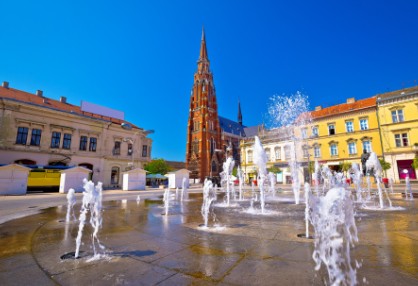
Places like Ante Starčević Square (Trg Ante Starčevića), the city’s central square, quickly became familiar parts of daily life, especially near the towering Church of St. Peter and St. Paul (Konkatedrala sv. Petra i sv. Pavla), one of the city’s most recognizable landmarks.
For the children, the city slowly transformed from “somewhere new” into somewhere familiar.
Ante also became increasingly connected to Osijek’s developing IT community, attending local events and networking with professionals helping shape the city’s growing technology sector.
Rediscovering Slavonia
One thing they did not expect was how deeply they would connect with Slavonian culture and traditions.
Family weekends in Vinkovci quickly became some of the children’s favourite memories.
The kids fell in love with traditional foods like slavonski čobanac and kulen.
One event especially became important to the family each year:
Vinkovačke Jeseni.
The music.
The folklore.
The traditional costumes.
The parades.
The local food.
The celebrations of Croatian identity and Slavonian heritage.
For Ante and Katarina, it became something much deeper than a festival.
It was a way for their children to finally experience the traditions their grandparents once described from afar.
“Our kids are no longer hearing stories about Croatian culture,” Katarina says. “They’re living it.”
The family also regularly visits Vukovar, especially during Dan Zahvale and remembrance events where the children learn about Croatia’s history and sacrifices through conversations, memorials, and veterans who continue preserving those memories.
For Ante, helping his children understand Croatia’s past became just as important as helping them build their future.
“To understand where we are going, they should also understand what Croatia went through,” he says.
Reconnecting With Roots — and Building a Future
For Ante and Katarina, this journey became about more than reclaiming citizenship.
It became about continuing something generations before them fought hard to preserve abroad.
Their grandparents carried Croatian identity across oceans.
Now it was their turn to continue that story.
But this time, from Croatia itself.
Their children are now growing up surrounded by the language, traditions, and everyday culture that previous generations worked so hard to keep alive overseas.
Now, those traditions feel real and visible around them every day.
The children walk through streets filled with Croatian history, hear stories connected to Slavonia and Vukovar, and experience the same cultural identity their grandparents once tried so hard to preserve abroad.
For Ante and Katarina, there is something deeply emotional about watching their children grow up connected to the homeland their family once left behind.
And for the family, that feels deeply meaningful.
“It feels like we finally connected the past with the future,” Ante says.
How LetsGo2Cro Helped Make the Journey Possible
Returning to Croatia involved much more than simply applying for citizenship.
The journey included:
- rebuilding family documentation
- sourcing Croatian records
- resolving inconsistencies in documents
- understanding Croatian citizenship pathways
- preparing applications
- organizing relocation planning
- navigating local procedures and settlement steps
At LetsGo2Cro, we helped guide the family through each stage with structured support and personalized guidance for Croatian citizenship.
This included:
- Croatian citizenship by descent guidance
- document sourcing assistance from Croatia
- certified translation coordination
- application preparation support
- relocation planning guidance
- support understanding local administrative procedures and integration steps
Every family’s journey is different.
Our goal is simple:
To help make your return to Croatia clear, manageable, and well planned.
Life Looks Different Now
Today, life in Osijek feels calmer.
More connected.
More intentional.
The family spends more time together.
Weekends feel slower.
Their children are growing up close to Croatian language, traditions, and family connections that once existed only through stories abroad.
Croatia no longer feels like a distant part of their identity.
It feels like home.
Final Thought
For Ante and Katarina, returning to Croatia was never simply about changing countries.
It was about reconnecting generations.
Honouring family history.
And building a future their grandparents once dreamed about from far away.
Now, that story continues — not abroad, but in Croatia itself.
Book Your Zoom Consultation Today
Take the first step toward living in Croatia with clarity and confidence.
📩 Schedule your consultation with LetsGo2Cro and receive personalized guidance tailored to your citizenship, residency, or relocation journey.
Your return to Croatia starts with a clear plan.