
Everything I Wish Someone Had Told Me Before Moving to Croatia
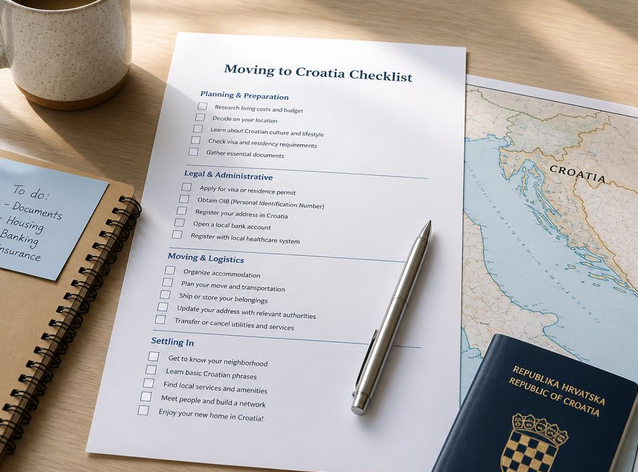
Moving to Croatia can be an exciting and deeply meaningful decision. Perhaps you are returning to your Croatian roots, moving for work, joining your partner, or looking for a different way of life. Whatever brings you here, there is often a great deal to look forward to.
But alongside the excitement, there are practical realities that are not always obvious before you arrive.
When we moved to Croatia, we discovered that preparing for a move involves much more than arranging accommodation, packing your belongings, and deciding where you want to live. There are administrative processes to understand, documents to organize, and practical decisions that can affect what you need to do next.
Looking back, there are several things I wish someone had explained to me before the move. Not because they would have made everything effortless, but because understanding what to expect would have helped us approach the transition with greater clarity and confidence.
If you are planning to move to Croatia, or have recently arrived, here are some of the lessons worth considering before you begin.
Moving to Croatia Involves More Than the Move Itself
Before moving, it is easy to concentrate on the obvious things: finding somewhere to live, organizing the journey, arranging transport, and deciding what to bring with you.
These are important considerations, but they are only part of the process.
Once you begin establishing your life in Croatia, other questions may arise. What administrative steps apply to your circumstances? Which documents might you need? Are there registration requirements to understand? How should you approach healthcare arrangements and other practical matters?
The answers will depend on your individual situation, including your citizenship, residence status, family circumstances, and plans.
One of the most useful lessons is to look beyond the physical move and prepare for the process of settling in. Arriving in Croatia is one milestone; establishing your life here is another.
Croatian Bureaucracy Can Be Difficult to Navigate Without Preparation
One of the challenges of moving to Croatia can be understanding how administrative procedures work and which requirements apply to you.
You might find information online that seems relevant, only to discover that the guidance relates to a different situation. A procedure that applies to one person may not apply to someone with a different citizenship or residence status.
This can make it difficult to know where to begin, which information to rely on, and what you should prepare in advance.
The challenge is not necessarily that every procedure is complicated. Sometimes, the difficulty lies in understanding how the different requirements fit together.
I learned the importance of looking at the bigger picture rather than treating every administrative question as a separate task.
Before moving, it is worth identifying the procedures that may apply to your circumstances, checking official sources, and making a note of anything that needs clarification.
You do not need to understand every detail before you arrive. However, having a general understanding of what lies ahead can make the process feel less overwhelming.
The Order of Tasks Matters
This is one of the most important lessons to understand before relocating to Croatia.
When you have a long list of things to organize, it is tempting to start with whichever task seems easiest or most urgent. But some administrative processes may depend on information, documentation, or steps that need to be completed first.
Without understanding these connections, you can spend time preparing for something before you are ready to proceed.
For example, you may need to clarify your residence arrangements before you can determine which administrative procedures are relevant to you. Documentation requirements can also differ depending on your circumstances.
This is why a simple list of tasks is not always enough. You also need to understand which matters deserve attention first and which can wait.
A clear sequence can help you prioritize your time, reduce unnecessary confusion, and approach the transition one step at a time.
Do Not Assume Someone Else’s Experience Will Be the Same as Yours
When preparing for a move, it is natural to look for advice from people who have already made the transition.
Online forums, social media groups, personal blogs, and conversations with friends can provide useful insights. They can help you discover practical considerations you might not otherwise have thought about.
However, personal experiences are not always directly transferable.
Someone who moved to Croatia several years ago may have encountered different procedures. Someone returning as a Croatian citizen may face different requirements from someone relocating under another residence pathway. Moving alone can also involve different priorities from moving with a partner or children.
This does not mean that other people’s experiences are not valuable. It means that you need to understand how their circumstances compare with your own.
Use personal stories to identify questions worth asking, then check which answers apply to your situation.
The Documents You Need Deserve More Attention Than You Might Expect
Documentation is an area where preparation can make a real difference.
Depending on your circumstances, you may need to consider identity documents, civil records, supporting evidence, or other paperwork relevant to your move.
The documents required, their acceptable format, and whether translations or additional formalities are necessary will depend on the particular procedure and your situation.
It is worth identifying potential documentation requirements early rather than assuming you can organize everything after arrival.
Before you move, consider:
- Which documents might be relevant to your circumstances.
- Whether any documents need to be obtained before leaving your current country.
- How you will keep important documents accessible and organized.
These are questions to investigate rather than a universal list of requirements. Always confirm the current rules for the specific procedure you need to complete.
A little preparation can help you avoid discovering too late that an important document needs additional attention.
Your First 30 Days Deserve a Plan of Their Own
It is easy to spend months preparing for the move itself and assume that everything will become clearer once you arrive.
In reality, the first month can bring a new set of decisions.
You may be getting familiar with your surroundings, identifying administrative priorities, learning how everyday services work, and trying to understand what needs to happen next.
At the same time, you are adjusting to a new environment and beginning to establish a routine.
Trying to manage everything at once can make the transition feel more complicated than it needs to be.
A more useful approach is to divide the first month into manageable stages:
- Before arrival: Identify the matters that may need preparation and clarify what applies to your circumstances.
- Days 1–7: Get oriented and identify immediate practical and administrative priorities.
- Weeks 2–3: Follow up on relevant procedures, documentation, and outstanding questions.
- Days 22–30: Review your progress, identify anything unresolved, and plan your next steps.
These stages are a planning framework, not a universal administrative timetable. Some procedures may need to begin before arrival, while others may take longer than 30 days.
The aim is not to complete everything within a month. It is to understand what matters, what comes next, and how to move forward in a more organized way.
To help you prepare, use our First 30 Days in Croatia Checklist to plan your priorities and organize the steps relevant to your move.
Settling In Is About More Than Administration
Paperwork and practical arrangements are important, but they are not the whole experience of moving to another country.
There is also the process of becoming familiar with your surroundings, learning how everyday systems work, discovering local routines, and gradually building a sense of belonging.
For members of the Croatian diaspora, returning can carry an additional emotional significance. You may feel connected to Croatia through your family, language, culture, or memories, yet still need time to understand what living here actually involves.
You can feel excited about your decision and uncertain about particular aspects of the transition at the same time. That is entirely understandable.
Give yourself room to adjust. You do not need to know everything immediately, and you do not need to have every aspect of your new life organized from the beginning.
Sometimes, progress simply means understanding something that seemed confusing a week earlier or feeling a little more confident about what comes next.
Ask Questions Before Small Uncertainties Become Bigger Problems
One thing that can make moving more difficult is assuming that you should already know what to do.
When information is unclear, it can be tempting to make an assumption, postpone the decision, or keep searching online in the hope that the answer will eventually become obvious.
Sometimes that works. In other situations, it can lead to wasted time or unnecessary uncertainty.
If you are unsure which procedure applies, what documentation may be required, or how one step relates to another, seek clarification from the relevant official source or a suitably qualified professional.
You do not need to wait until you have a serious problem before asking for help.
Recognizing what you do not know is part of preparing well. It allows you to focus on the questions that matter instead of trying to work everything out alone.
There Is No Single Moving to Croatia Checklist That Fits Everyone
General guides are useful because they introduce the main areas to consider. However, no single checklist can account for every possible circumstance.
Your priorities will depend on factors such as your citizenship, residence status, family arrangements, employment plans, and whether you have already completed certain steps.
For one person, the main priority may be understanding residence formalities. For another, it may be organizing family documentation, clarifying healthcare arrangements, or determining which administrative steps are relevant after arrival.
This is why I believe a useful relocation plan should begin with the person, not simply with a generic list of tasks.
Start by understanding your circumstances. Identify the areas that require attention. Then organize your priorities in a way that reflects your actual situation.
You can use our First 30 Days in Croatia Checklist as a starting point for understanding the stages of your transition.
What I Would Do Differently If I Were Preparing to Move Again
Looking back, I would spend less time trying to find one source that explained everything and more time organizing the information relevant to my own circumstances.
I would identify the questions I needed answered, distinguish confirmed requirements from assumptions, and pay closer attention to how different steps connected.
I would also plan for the period after arrival rather than concentrating almost entirely on the move itself.
Most importantly, I would remind myself that not everything needs to be figured out at once.
Moving to Croatia is a significant transition. It deserves preparation, but it also requires flexibility. Some things will become clearer as you go, and your priorities may change once you begin establishing your life here.
The goal is not to anticipate every possible difficulty. It is to arrive with a clearer understanding of what to consider and a practical way to approach the next steps.
How LetsGo2Cro Can Help
At LetsGo2Cro, we understand that moving to Croatia involves more than finding information. It involves understanding which information applies to you, identifying the right priorities, and working out how to approach the process.
Our guidance draws on our professional experience and personal understanding of the relocation journey. We aim to help you navigate the transition with greater clarity, structure, and confidence.
Whether you are preparing for an upcoming move or have already arrived, the right starting point is understanding your circumstances and the questions you need to address.
If you are planning your first month in Croatia, begin with our First 30 Days in Croatia Checklist.
If you would like support tailored to your circumstances, explore our personalized guidance options to identify the kind of assistance that best fits your plans.
Moving to Croatia: Start With a Clearer Plan
Moving to Croatia can open the door to an exciting new chapter, but the transition is easier to approach when you understand what may lie ahead.
You do not need to know every rule, anticipate every challenge, or have every detail resolved before you arrive.
Start by asking the right questions, preparing for the matters that may require attention, and organizing your next steps around your own circumstances.
And remember: you do not have to work everything out on your own.
📩 Planning your move to Croatia? Explore the First 30 Days in Croatia Checklist and take the first step towards a more organized transition.