
From Perth to Zagreb: A Family’s Emotional Journey Back to Croatia Through Citizenship by Descent
Returning Home: Real Croatian Diaspora Stories
Part 1
Croatian citizenship by descent is more than a legal process — for many families it is a return to identity, heritage, and home.
For Marko and Elena, Croatia was never something distant.
It was something lived.
They were raised with Croatian food on the table, stories from their grandparents, and traditions that never left their home in Perth.
They didn’t “discover” Croatia later in life — they grew up with it.
But at some point, they realised something important:
They had inherited a culture… but not yet returned to the place it came from.
Their great-grandparents had left Croatia in the early 1960s by ship, starting a new life in Australia.
And now, decades later, the journey was coming full circle.
Not as migration — but as return.
“We were already Croatian… we just weren’t there yet”
Marko remembers it clearly:
“We didn’t feel like we were learning Croatia. We already knew it through our parents and grandparents. It was part of us.”
Elena adds:
“It wasn’t about becoming Croatian. It was about finally going back to where we already belonged.”
Their children, Mia and Luka, grew up hearing Croatian phrases at home, eating traditional food, and celebrating family customs — but this move meant something deeper:
They were now passing it forward — not from abroad, but from the homeland itself.
Rebuilding the Story: Citizenship Through Heritage
The journey began with uncertainty.
Old documents. Missing records. Name variations. Generational gaps.
But also something stronger — identity.
Through structured guidance, the family reconstructed their lineage:
- Gathering birth and marriage records
- Croatian parish and municipal records
- Document research
- Resolving spelling and naming inconsistencies
Step by step, the picture became clearer as family records and generations of history began to connect.
The possibility of Croatian citizenship by descent no longer felt distant or uncertain.
And suddenly, Croatia wasn’t just heritage anymore.
It was real in a way it had never been before.
“We didn’t feel lost — we felt guided”
Marko reflects:
“The biggest relief wasn’t the approval. It was knowing someone actually helped us understand what to do next.”
The process wasn’t rushed — it was structured.
With support and step-by-step guidance, the family moved through:
- document preparation
- translations
- application structuring
- consular requirements
And instead of feeling overwhelmed, they felt steady.
Elena says:
“We didn’t feel alone in it. That made all the difference.”
Moving to Croatia: The Relocation Journey from Perth to Zagreb
Citizenship approval was only the beginning.
The real journey started when we decided to pack our lives into boxes and move home.
Once the citizenship approval came through, everything became real.
It wasn’t just paperwork anymore — it was life-changing movement.
We packed our lives into boxes, arranged a container shipment from Perth, and slowly began preparing for the move to Croatia.
There were practical steps that needed to be handled carefully:
- shipping and logistics for personal belongings
- organising important documents for entry and settlement
- understanding health insurance requirements
- preparing school enrolment for the children
- registering for local administrative procedures
At times it felt overwhelming — but we were not alone.
With the right guidance and support, each step became clearer. Instead of uncertainty, we had structure. Instead of confusion, we had direction.
And that changed everything.
Even the emotional side of the move felt grounded.
There was a moment where we said to each other:
“Ako ne sada, onda kada?”
If not now, then when?
That became the decision point.
Not fear. Not delay. Just clarity.
And once we arrived in Zagreb, the settling-in process felt surprisingly smooth.
From school integration to health system registration, to simply learning how everyday life works — everything became manageable because we understood the steps ahead.
We weren’t just moving.
We were transitioning into life in Croatia — with support, structure, and confidence.
Arriving in Zagreb: Where Heritage Becomes Everyday Life
Life in Zagreb didn’t feel like starting over.
It felt like stepping into something familiar.
They already understood the culture — the rhythm just changed.
Mornings now begin with kava in small cafés where time slows down.
Saturday mornings are spent walking through markets like Dolac, choosing fresh food, chatting with vendors, and feeling part of the everyday flow.
There’s a comfort in simplicity:
- vanilla slices from local bakeries
- krafne on weekends
- small boutique shops hidden in side streets
- long walks through Maksimir Park
- evenings strolling through the city
- Sunday mass at the Cathedral
But what surprised them most was how natural it felt.
““It didn’t feel like starting over,” Elena says. “It felt like coming back to something that was always part of us.”
A City of History You Don’t Just See — You Walk Through It
One of the most powerful parts of life in Zagreb is history being part of daily life.
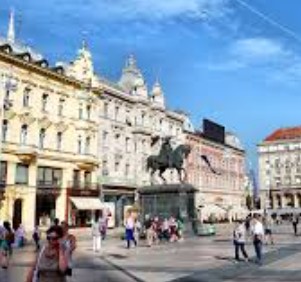
Marko often walks past statues like King Tomislav and Ban Josip Jelačić on his way to work.
“I used to see these in photos growing up. Now I pass them on my way to catch a tram. It still feels unreal sometimes.”
That connection — from textbook history to lived reality — is something they never expected to feel so strongly.
Even everyday routines feel layered with meaning:
getting on a tram, walking through old squares, passing centuries of history without even trying.
Football, Community, and Belonging
Weekends often include local football matches.
Standing in the crowd, surrounded by chants, energy, and passion, Marko feels something familiar but new:
“It’s not just watching football. It’s being part of something bigger.”
Advent in Zagreb: A City That Feels Like Magic
Winter brings Zagreb to life in a different way.
Advent transforms the city:
- lights across every square
- ice skating in the centre
- warm drinks in wooden stalls
- music echoing through streets
Mia skates for an hour and still doesn’t want to leave.
“It feels like the whole city is celebrating,” she says.
And for the family, it does.
Summers in Dalmatia: Where Life Slows Down
Then comes summer — and everything shifts south.
Split. Makarska. Pebble beaches. Warm nights.
This is where family becomes even more real.
Many of their relatives still live in Dalmatia, and summer became the season of reconnecting — not through calls or old stories, but around dinner tables, beach days, and long evenings together.
Cousins the children had only heard about suddenly became part of everyday life.
There were family lunches that stretched for hours, BBQs by the sea, drinks on terraces late into the night, and children running barefoot between the beach and the garden.
Fresh summer fruit seemed to appear everywhere — peaches, figs, watermelon, cherries — always shared, always from someone’s garden or local market.
Ice cream after dinner became routine.
Evening walks through old stone streets became part of life.
And the sea — always the sea.
Swimming in clear water, sitting by the beach until sunset, and that feeling that nobody was checking the time.
Marko describes it simply:
“Life here doesn’t ask you to leave early. It asks you to stay longer.”
This was where po malo became real.
Slow life. No rush. Just presence.
Dalmatia didn’t feel like a holiday destination.
It felt like another part of home.
Zagreb and Dalmatia: Two Rhythms, One Home
Zagreb brings structure, culture, rhythm, and everyday life.
It is school mornings, trams, markets, coffee meetings, city squares, and the steady comfort of routine.
Dalmatia brings something different.
It is warmth, sea air, long dinners, family gatherings, and evenings that stretch naturally into midnight.
One is movement.
The other is pause.
And together, they create balance.
The family never felt they had to choose between them.
They live both.
Zagreb gives them the foundation of daily life.
Dalmatia reminds them how to slow down and simply enjoy it.
Both feel equally Croatian.
Both feel equally like home.
And perhaps that is what they love most — Croatia offers both.
The energy of the city.
And the peace of the coast.
Easter, Seasons, and Living the Culture Fully
Life in Croatia changes with the seasons in a way that feels deeply connected to tradition and rhythm.
Spring brings Easter — not just as a holiday, but as a cultural experience filled with meaning. Churches are full, families gather, and tables are filled with krafne, traditional sweets, and shared meals that bring generations together.
Summer brings festivals, concerts in open squares, and long evenings where music fills the streets. Coastal towns come alive with local celebrations, while cities like Zagreb host cultural events, food festivals, and outdoor gatherings that stretch late into the night.
Autumn feels slower — markets become richer, cafés more intimate, and daily life returns to a steady rhythm.
Winter transforms everything again.
Advent in Zagreb becomes something almost unreal — lights across the city, Christmas markets in every square, ice skating in the centre, concerts, mulled wine stalls, and a sense of community everywhere you walk.
Church services, Saint days, and traditional celebrations are still deeply part of life here — not just symbolic, but actively lived. You feel them in the rhythm of the city, in the gatherings, and in how people come together.
Even small things matter — a local concert in a square, a neighbourhood celebration, or a simple evening walk during a festival season.
It is not just a calendar of events.
It is a way of living.
A slower, more present, more connected life.
Elena says:
“Even holidays feel like they mean something deeper here.”
Reconnecting With Roots — and Passing It Forward
For us, this journey was never just about citizenship.
It was about continuity.
Our parents and grandparents carried Croatia with them — through food, language, stories, and traditions. They did their part in keeping it alive across generations, even far from home.
Now, it feels like it is our turn.
But not from abroad.
From here — from the motherland itself.
Our children are now growing up inside the culture we once only heard about. They are not learning it second-hand anymore — they are living it every day.
From school life in Zagreb, to summers in Dalmatia with cousins, to celebrating holidays that once felt distant, everything is now part of their everyday world.
There is something powerful about that shift.
What was once memory is now experience.
What was once heritage is now home.
And in many ways, it feels like completing a circle that started generations ago.
We are not just preserving our roots anymore.
We are living them — and passing them forward, fully embedded in the place where it all began.
How LetsGo2Cro Helped Make the Journey Possible
For Marko and Elena, the journey back to Croatia started with one simple question:
Could we actually do this?
From citizenship by descent to full relocation and settling into life in Croatia, having the right guidance made all the difference.
At LetsGo2Cro, we helped support every stage of the journey:
- Citizenship by descent guidance and pathway review
- Document sourcing from Croatia and family record tracing
- Certified translations and application preparation
- Submission guidance for Croatian consular requirements
- Relocation planning and practical move preparation
- Support with settling in, local procedures, and integration steps
- Guidance with schools, health insurance, and everyday administrative processes
Moving countries is never just about paperwork.
It is about clarity, timing, confidence, and knowing what comes next.
With structured support, the process became manageable — not overwhelming.
Marko says it best:
“The difference wasn’t just the paperwork. It was knowing we had a clear path forward.”
Because returning to Croatia should feel like coming home — not navigating it alone
Life, Challenges, and Finding Support
The transition wasn’t always simple.
There were adjustments:
- paperwork systems
- language differences
- administrative steps
But nothing felt overwhelming alone.
With support from family, friends, and guidance along the way, everything became manageable.
Marko reflects:
“We didn’t do this alone. And that made all the difference.”
This Is What Coming Home Feels Like
For this family from Perth, Croatia is no longer a story told by others.
It is:
- morning coffee in Zagreb
- summer nights in Dalmatia
- children in Croatian schools
- football on weekends
- history on every corner
- and a feeling of belonging that doesn’t need explanation
Elena says it best:
“We didn’t move to Croatia. We came back to it.”
Could You Do This Too?
Many families with Croatian ancestry don’t realise that citizenship by descent may be possible — even when documents feel incomplete.
With the right structure and guidance, even complex cases can be resolved step by step.
At LetsGo2Cro, we help individuals and families:
- understand potential pathways
- reconstruct documentation
- navigate citizenship applications
- prepare structured submissions
Because often, the difference is not possibility.
It’s clarity.
Final Thought
For one family from Perth, Croatia became more than heritage.
It became home — again.
And sometimes, the most meaningful journeys are not forward…
but back.
Book Your Zoom Consultation Today
Take the first step toward living in Croatia with clarity and confidence.
📩 Schedule your consultation with LetsGo2Cro and receive personalized guidance tailored to your citizenship, residency, or relocation journey.
Your return to Croatia starts with a clear plan.